Smartphone Camera Features Explained: What Really Matters
Stop chasing megapixels. Learn which camera specs—sensor size, optics, stabilization, and software—truly shape your phone's photos and videos.
Foundations: Sensor Size and Megapixels — The most important piece of a phone camera is the sensor. A larger sensor size gathers more light, improving dynamic range, color depth, and low-light performance. While megapixels get attention, they mainly determine how much you can crop or print without losing detail. What matters more than a big megapixel number is pixel size and the quality of image processing that follows the capture. Modern phones use computational photography to combine multiple frames, clean noise, and enhance texture, often outperforming raw hardware. Techniques like pixel binning merge adjacent pixels to boost brightness and reduce noise, especially at night. Bigger sensors also allow a more natural background blur without relying solely on software. Consider readout speed too, which affects rolling shutter and burst shooting. In short, prioritize sensor area, pixel efficiency, and smart processing over sheer megapixel counts, and look for balanced specs rather than chasing a single headline number.
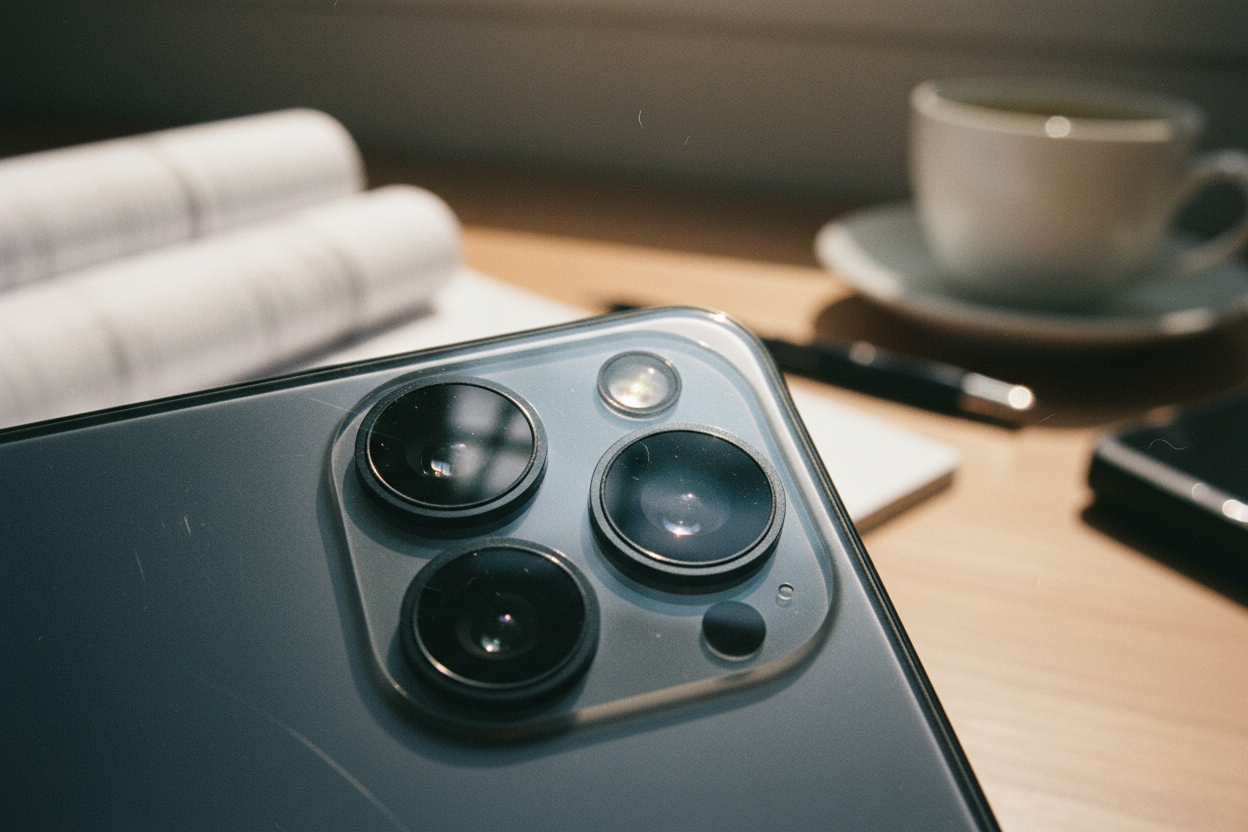
Glass, Aperture, and Stabilization — Great images start with great optics. The quality of the lens (elements, coatings, and alignment) influences sharpness, contrast, and control of aberrations like flare and fringing. The aperture (f-number) dictates how much light hits the sensor; a wider aperture admits more light for cleaner images and a shallower depth of field. However, wider is not always better if it softens corners or introduces distortion. To keep shots crisp, optical image stabilization (OIS) counters hand shake by physically shifting lens or sensor, while electronic image stabilization (EIS) aligns frames in software. Both help, but OIS is especially valuable in low light when shutter speed slows. Remember the exposure triangle: aperture, shutter speed, and ISO work together, and processing fills the gaps. For consistent results, favor lenses with reliable sharpness across the frame and effective stabilization that works in both photos and video without adding jitter or warping.
HDR and Computational Photography — Today's standout images come from smart HDR and multi-frame stacking. Instead of a single shot, the camera captures a rapid burst at different exposures, then blends them to recover highlights, lift shadows, and reduce noise. Good HDR preserves contrast and micro-detail without overcooking skies or flattening faces. Look for natural tone mapping that keeps skin tones believable and avoids halos around bright edges. Advanced pipelines align moving subjects to reduce ghosting, while selective sharpening and denoising maintain texture in hair, foliage, and fabric. Shooting RAW offers more editing latitude, but modern computational JPEG or HEIF outputs can be excellent right out of the camera. Pay attention to how the camera handles mixed lighting, backlit portraits, and indoor scenes with bright windows. Consistency across wide, main, and tele lenses is another hallmark of strong HDR. In practice, reliable computational processing often matters more than any single hardware spec.
Autofocus, Shutter, and Capture Speed — Sharp photos depend on confident autofocus and minimal shutter lag. Systems using phase detection (PDAF) and variants like dual-pixel AF lock focus quickly by measuring phase differences directly on the sensor. Contrast detection is precise but slower, and laser AF can help in dim scenes by judging distance. The best cameras combine methods for speed and accuracy, then add subject tracking that follows faces, eyes, pets, or fast action. Look for predictive algorithms that anticipate motion, maintain focus in bursts, and minimize hunting. A responsive shutter pipeline and pre-capture buffering improve your odds of catching decisive moments, while burst modes help with sports or toddlers on the move. Reliable tap-to-focus and expose, focus peaking in manual modes, and adjustable AF areas are practical tools. Ultimately, the camera that nails focus quickly, repeatedly, and on the right subject will outperform a spec monster that misses the moment.
Lenses, Zoom, and Perspective — Focal length shapes storytelling. A main lens offers balanced perspective for most scenes. An ultrawide adds drama and context but can introduce distortion at the edges; good correction keeps lines straight and people natural. A telephoto brings distant subjects closer and compresses background for flattering portraits. True optical zoom changes focal length through dedicated optics, preserving detail, while digital zoom crops and interpolates, which can soften textures. Some phones blend both via hybrid zoom, and large sensors can provide a clean lossless crop around 2x without a separate tele. For longer reach, periscope designs fold light through prisms to achieve slim telephotos with better clarity. Do not overlook macro capabilities for close-ups of textures, flowers, or products; dedicated lenses or high-resolution crops can both work. Evaluate color and exposure consistency across lenses, and watch how well the camera manages edges, flare, and fine detail at every focal length.
Video Features That Truly Count — Smooth, detailed footage relies on solid stabilization, efficient codecs, and smart autofocus. OIS reduces micro-jitters, while EIS refines motion and horizon leveling; the best systems mix both without warping corners. Flexible frame rates (for example, cinematic 24, general 30, or action-friendly 60) and robust bitrates preserve motion detail and reduce compression artifacts. Clean audio matters as much as image quality, so multiple microphones, effective wind reduction, and precise gain control help voices stay clear. Watch for natural exposure and white balance transitions, limited focus breathing, and gentle AF pulls that do not twitch. Features like HDR video, log or flat profiles, and reliable rolling shutter control expand creative range, especially in bright scenes or when panning. Practical touches such as subject tracking, waveform or zebra aids, and quick lens switching without color shifts make filming easier. Choose video tools that deliver consistency, not just headline resolutions.