TV Sound Upgrade: Soundbars vs Speakers for Better Audio
Debating a TV sound upgrade? Compare soundbars vs speakers on clarity, bass, Atmos, setup, price, and room size to pick the best fit for your space.
Why Upgrade Your TV Sound
Thin TV screens look sleek, but their tiny, downward-firing drivers struggle with clarity, bass, and dynamic range. Dialogue can get lost during action scenes, and music often feels flat because there simply isn't enough space for robust speakers in ultra-slim panels. A dedicated audio upgrade unlocks fuller, more immersive sound with better separation between voices, effects, and music. Two mainstream routes dominate home entertainment: the soundbar, which integrates multiple channels in a compact enclosure, and separate speakers, which rely on individual components for each role. Your choice hinges on room size, layout, content preferences, and how much complexity you're willing to manage. If you want plug-and-play convenience and minimal clutter, a soundbar can transform your TV experience quickly. If you crave expansive imaging, precise placement of sounds, and long-term upgradability, a speaker-based system offers deeper performance. Understanding your priorities helps align expectations, so you end up with an audio path that enhances movies, sports, games, and casual streaming without compromise.
How Soundbars Simplify Better Sound
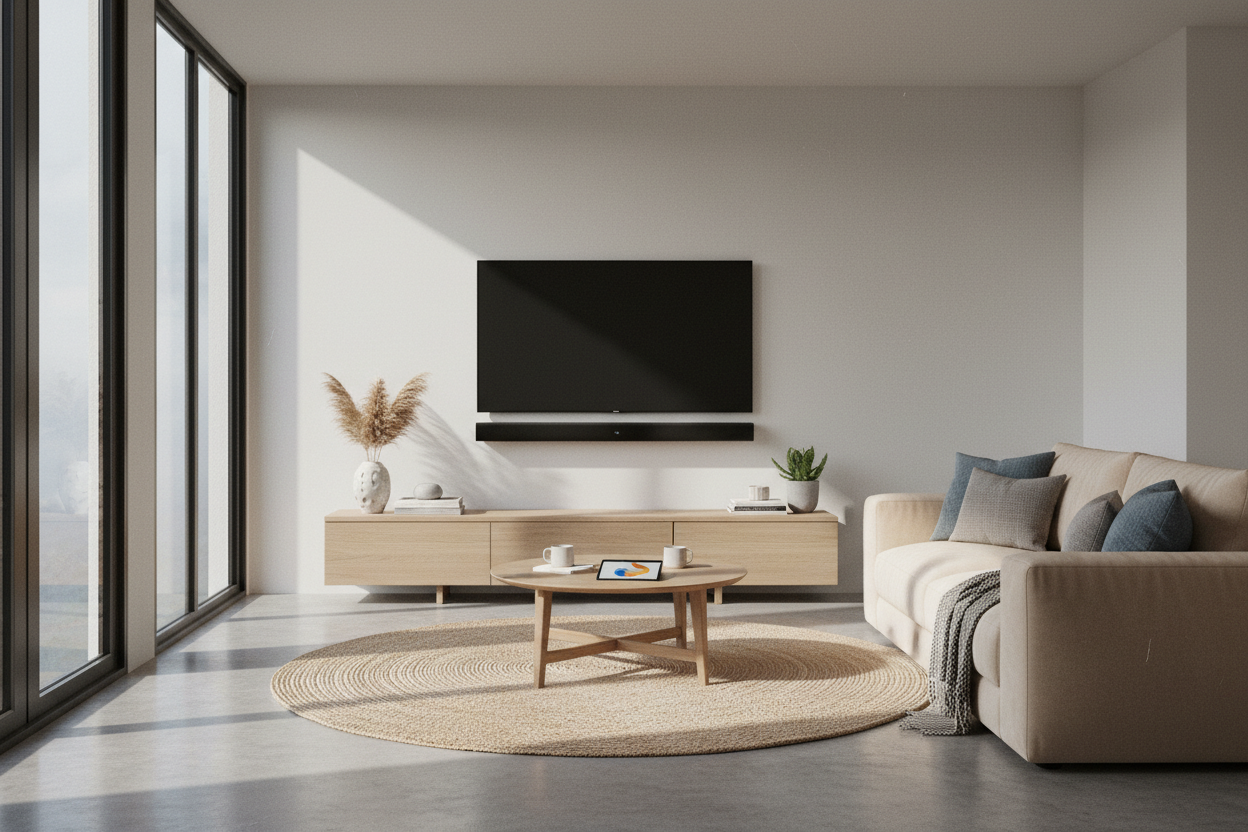
A soundbar condenses multiple channels, amplification, and digital signal processing (DSP) into a single unit, often with a compact wireless subwoofer and optional satellite rears. Setup is typically one-cable via HDMI eARC, making it ideal for small spaces or anyone who values simplicity. Many models include virtual surround and even upward-firing drivers to simulate height effects, plus features like dialogue enhancement, night mode, and room auto-calibration. Because the bar's drivers are close together, imaging is narrower than true separates, but smart DSP can widen the perceived stage. Strengths include fast installation, neat cabling, and consistent performance without deep tweaking. Limitations involve reduced channel separation, reliance on room reflections for surround virtualization, and less headroom in large rooms. Look for a dedicated center channel for crisp speech, adjustable subwoofer crossover, and flexible mounting options. For renters, cozy living rooms, or minimalist setups, a soundbar delivers a big step up over TV speakers with minimal hassle.
When Separate Speakers Shine
A separate speakers setup typically combines an AV receiver or amplifier with bookshelf or floorstanding speakers, a dedicated center speaker, a subwoofer, and optionally surround or height channels. This approach excels at channel separation, creating a wide, stable stereo image and a deep soundstage where voices, instruments, and effects occupy precise locations. With more dynamic headroom, separates handle sudden explosions or orchestral peaks without strain, and you can tailor the system to your tastes through speaker selection, placement, and room correction. The trade-offs are space, cables, and setup time: you'll manage speaker wires, calibrate levels, and possibly fine-tune crossover points. Still, the payoff is flexibility and upgradeability—swap a better sub, add surrounds later, or improve the amplifier. If you love cinematic immersion, high-fidelity music, or plan to expand over time, separates offer superior performance per dollar once properly configured and can scale from apartments to dedicated media rooms.
Room Setup, Acoustics, and Placement
Your room shapes your results as much as the gear. For a soundbar, center it under the screen, avoid blocking drivers, and give side-firing elements a clear path to walls for effective virtual surround. For speakers, form an equilateral triangle with your main listening position, placing tweeters near ear height and using subtle toe-in to refine imaging. Angle the center channel toward ear level and keep it close to the screen for cohesive dialogue anchoring. Subwoofers benefit from careful placement; a corner can boost output, while the subwoofer crawl helps you find smoother bass. Tame reflections with soft furnishings like rugs and curtains, add simple isolation under speakers to reduce vibration, and mind asymmetric layouts or open floor plans that can skew balance. Ceiling height and wall materials influence the success of height virtualization and surround effects. Thoughtful room acoustics and precise placement can elevate modest systems and let premium setups reach their full potential.
Connectivity, Formats, and Ease of Use
The right connections simplify daily use and preserve audio quality. HDMI eARC allows higher-bandwidth multichannel audio and more reliable lip-sync, while standard ARC and optical can be fine for basic formats. Ensure your TV can passthrough advanced signals cleanly to the bar or receiver. Gamers should prioritize low latency modes and stable CEC control to power devices on and off together. Wireless features like Wi‑Fi casting and Bluetooth add convenience for music, but note that some codecs compress more than others. Seek support for common formats such as PCM, Dolby Atmos, and DTS:X, plus on-device room calibration that measures distance and levels. A center channel level trim, dialogue enhancement, and night mode can improve everyday usability. If you use multiple sources—streamers, consoles, set-top boxes—decide whether switching happens at the TV or receiver, and confirm video passthrough and audio handling match your needs without adding unnecessary complexity.
Budget, Value, and Upgrade Paths
Your budget should reflect room size, listening habits, and expectations. A midrange soundbar with a subwoofer often outperforms entry-level separates for sheer convenience and tidy cable management. However, if you value musicality and cinematic scale, a careful separates bundle—bookshelf speakers, a modest AV receiver, and a well-integrated sub—can deliver stunning value. Consider upgrade paths: adding surrounds later, stepping up the sub, or improving front speakers. Used or open-box options can stretch dollars if you verify condition. Prioritize features that matter daily—eARC, clear dialogue, reliable auto-calibration, and straightforward controls. Measure furniture and seating distances before buying, and plan for power outlets and cable routes. Ultimately, choose soundbars for sleek simplicity and predictable results, and choose speakers for maximum performance and long-term flexibility. Either route, a thoughtful match of room, features, and budget will turn flat TV audio into engaging, effortless home entertainment you enjoy every day.